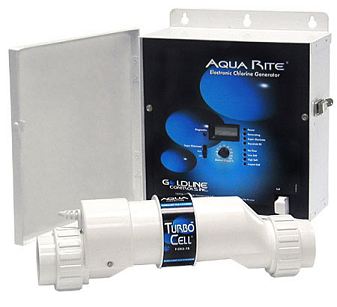
A salt chlorine generator converts dissolved salt into chlorine. It reduces manual chlorine handling, but the pool still requires appropriate water balance, circulation and generator output.
A warning displayed by the controller does not always identify the failed component. Salinity should be verified independently before salt is added, because excess salt can normally be reduced only by replacing water.
Cell Scale and Wear
Calcium can accumulate on cell plates and reduce output. Cells also wear with use and eventually require replacement. Frequent scaling can indicate a water-balance issue rather than a defective cell.
Flow and Control Faults
Low flow, a failed flow switch, wiring problems, corroded connections, temperature conditions or control-board faults can interrupt chlorine production.
Conversions
Before conversion, it is useful to consider existing metal components, natural stone, surface condition and equipment compatibility. Installation and output should be sized for the pool and its operating conditions.
Repair appointments and pricing: Diagnostic visits may carry a service fee, which is explained when the appointment is booked. Recommended repair or replacement work is quoted separately and begins only after approval.